
Preview — pick a layout
Azoth Ionic Delivery System — layout options
Both use the three mechanism graphics with no wide hero image. Version A keeps the original spray-and-list layout; Version B uses the image cards.
Version A — original layout (spray + mechanism list)
Azoth Ionic Delivery System
The peptide that doesn’t need an injection.
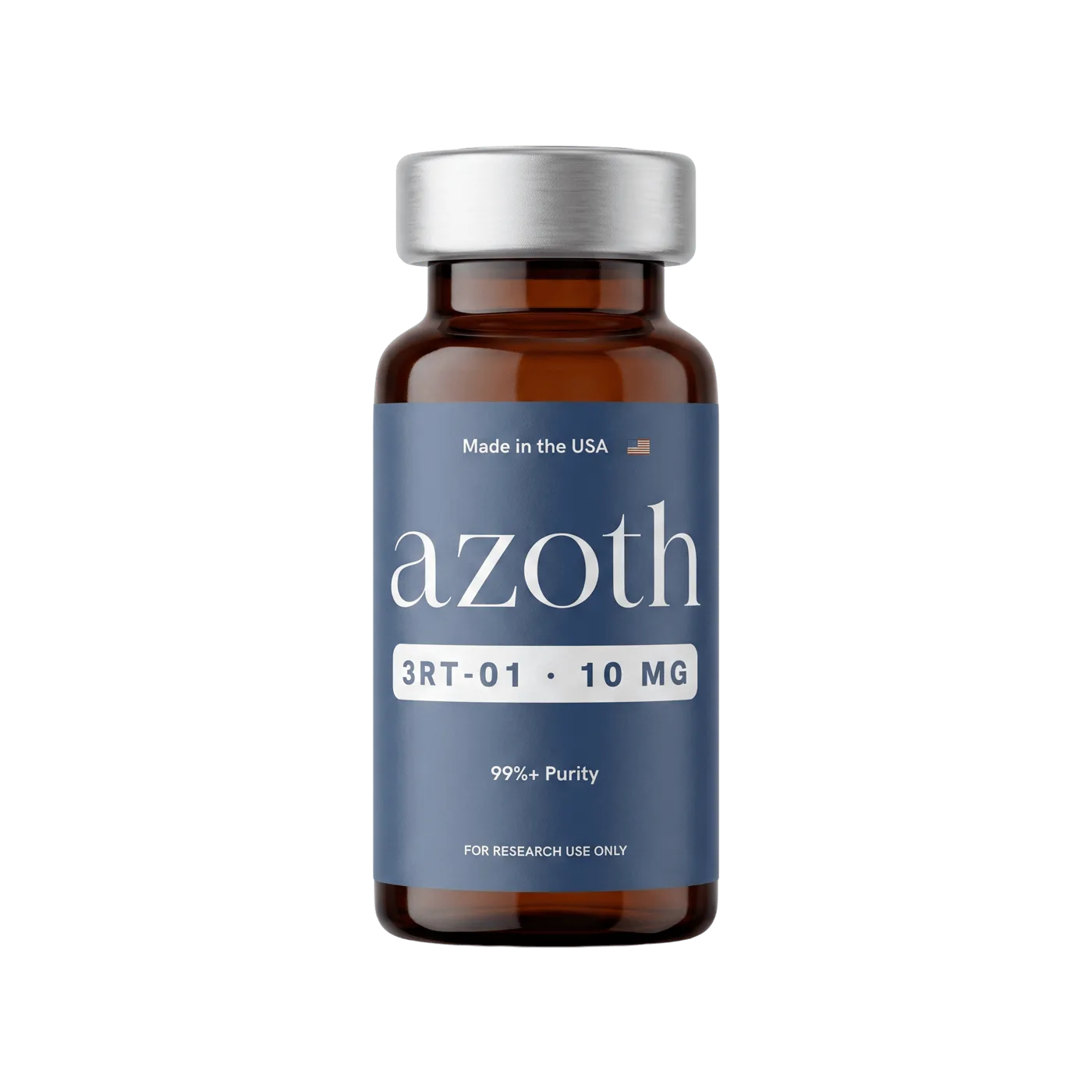
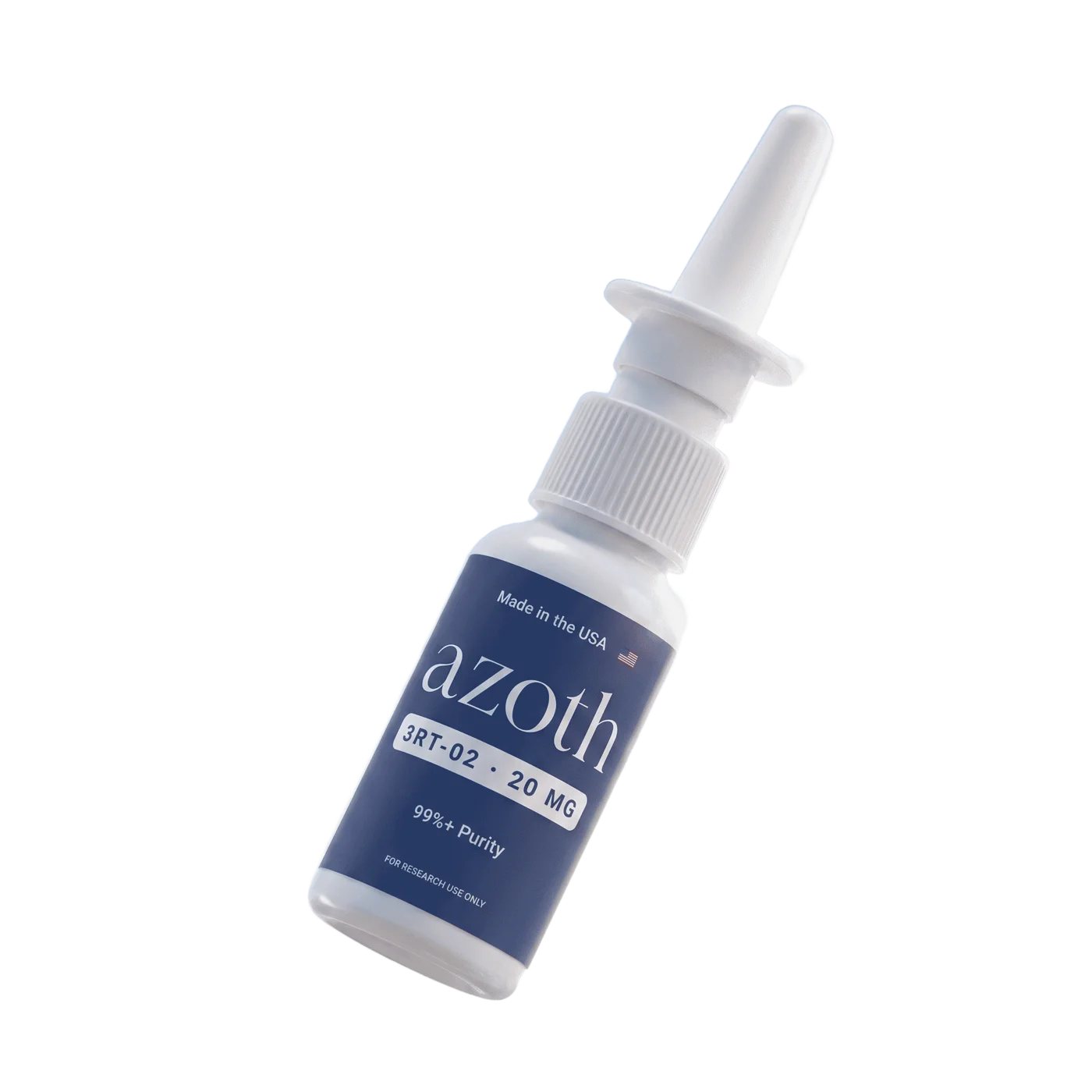
Research peptides are notoriously hard to deliver any way but injection. Our nasal sprays are formulated with the Azoth Ionic Delivery System, built from body-native molecules. It carries the compound across the nasal lining without an injection. No one else on the market has it, and we synthesize and manufacture every unit in the United States.
Three barriers stop a peptide. The system clears all three.
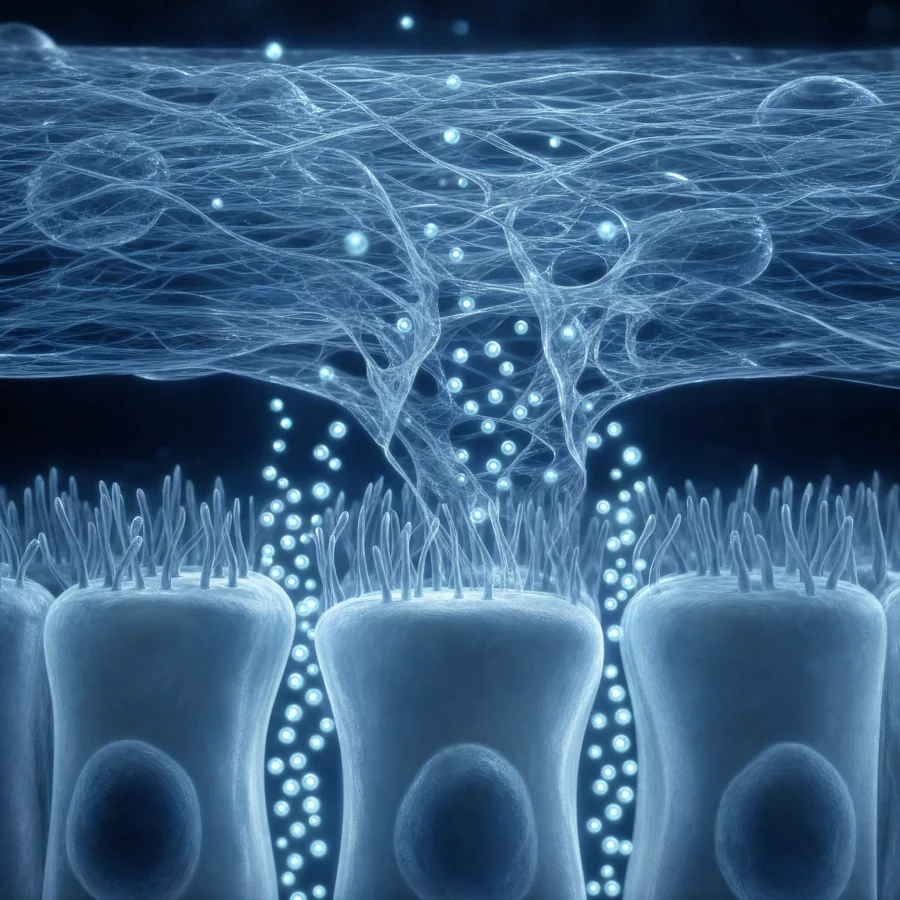
Mucus fluidization
The formulation loosens the mucus layer, cutting its viscosity by roughly 45%, so the compound reaches the epithelial surface instead of being trapped on top of it.
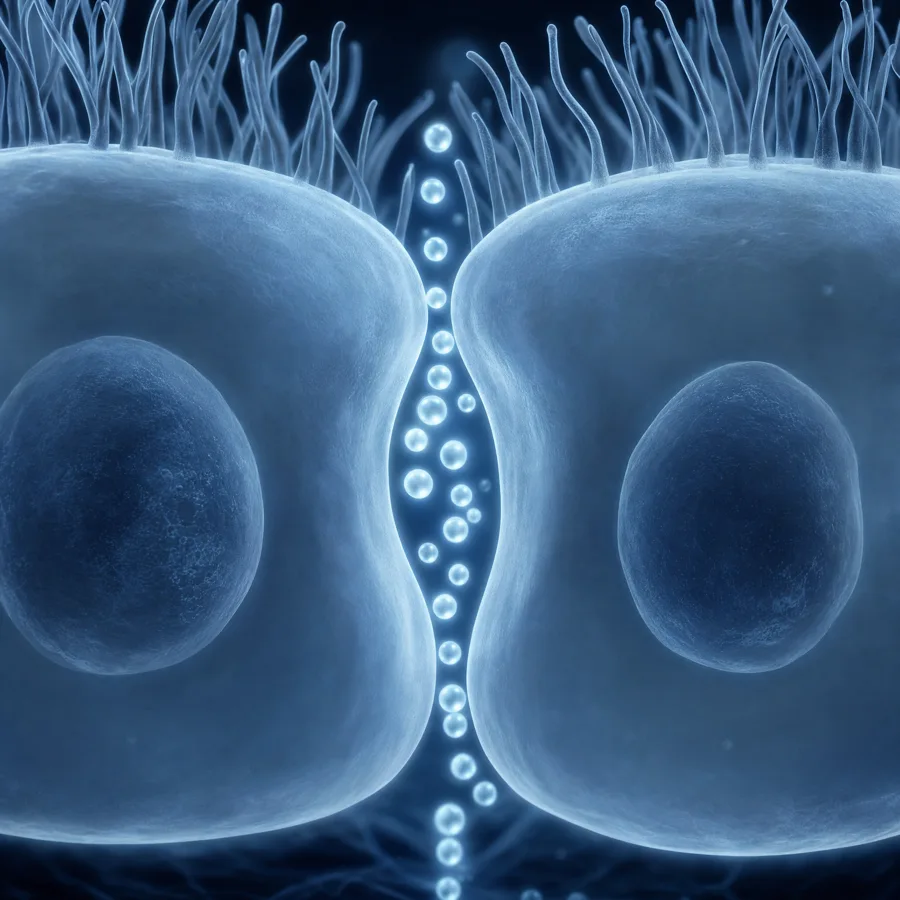
Tight-junction modulation
It briefly and reversibly widens the gaps between cells, raising paracellular transport 4 to 5 times, then lets them close. Modulation, not membrane disruption.
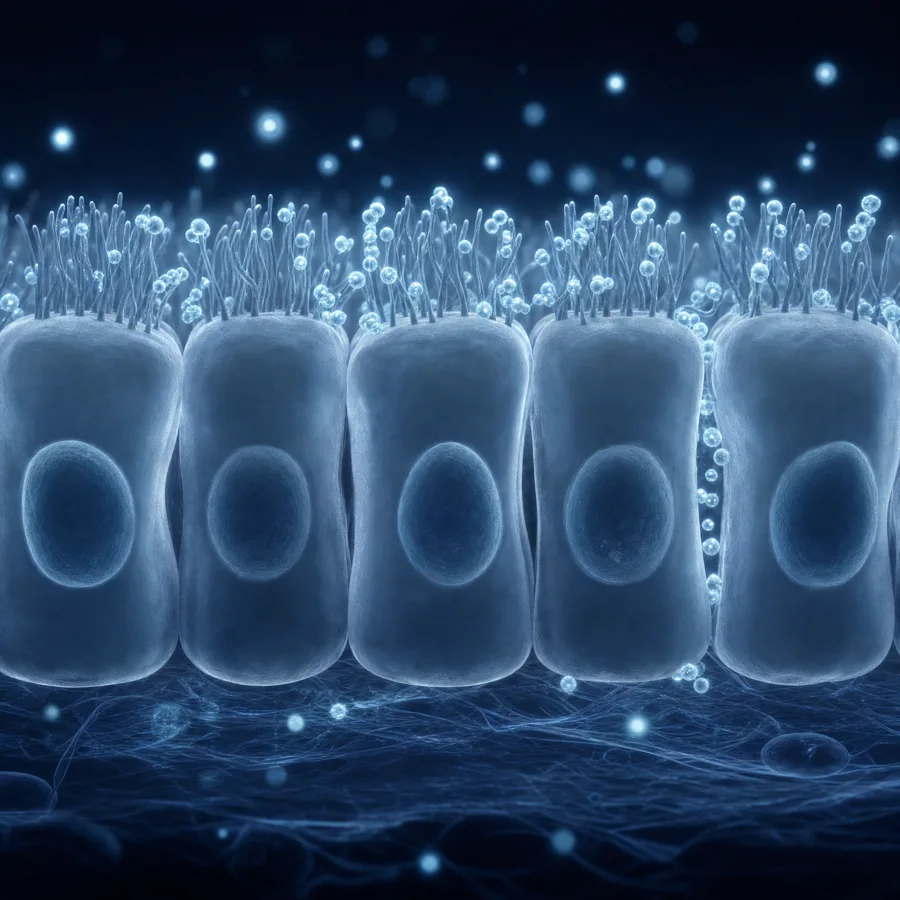
Mucoadhesion
Amino-acid cations grip the nasal lining and extend residence time. Where conventional sprays are cleared within minutes, this stays put long enough to be absorbed.
Figures from independent third-party preclinical laboratory testing. For research use only. Not a clinical claim.
Version B — card layout (three image cards)
Azoth Ionic Delivery System
The peptide that doesn’t need an injection.
Research peptides are notoriously hard to deliver any way but injection. Our nasal sprays are formulated with the Azoth Ionic Delivery System, built from body-native molecules. It carries the compound across the nasal lining without an injection. No one else on the market has it, and we synthesize and manufacture every unit in the United States.
Three barriers stop a peptide. The system clears all three.
Mucus fluidization
The formulation loosens the mucus layer, cutting its viscosity by roughly 45%, so the compound reaches the epithelial surface instead of being trapped on top of it.
Tight-junction modulation
It briefly and reversibly widens the gaps between cells, raising paracellular transport 4 to 5 times, then lets them close. Modulation, not membrane disruption.
Mucoadhesion
Amino-acid cations grip the nasal lining and extend residence time. Where conventional sprays are cleared within minutes, this stays put long enough to be absorbed.
Figures from independent third-party preclinical laboratory testing. For research use only. Not a clinical claim.
Version C — cards on desktop, centered swipe carousel on mobile
Azoth Ionic Delivery System
The peptide that doesn’t need an injection.
Research peptides are notoriously hard to deliver any way but injection. Our nasal sprays are formulated with the Azoth Ionic Delivery System, built from body-native molecules. It carries the compound across the nasal lining without an injection. No one else on the market has it, and we synthesize and manufacture every unit in the United States.
Three barriers stop a peptide. The system clears all three.
Mucus fluidization
The formulation loosens the mucus layer, cutting its viscosity by roughly 45%, so the compound reaches the epithelial surface instead of being trapped on top of it.
Tight-junction modulation
It briefly and reversibly widens the gaps between cells, raising paracellular transport 4 to 5 times, then lets them close. Modulation, not membrane disruption.
Mucoadhesion
Amino-acid cations grip the nasal lining and extend residence time. Where conventional sprays are cleared within minutes, this stays put long enough to be absorbed.
Figures from independent third-party preclinical laboratory testing. For research use only. Not a clinical claim.